What Is a Resonance Structure in Chemistry
In chemistry terms resonance describes the fact that electrons are delocalized or flow freely through the molecule which allows multiple structures to be possible for a given molecule. And so this is called pushing electrons so were moving electrons around and its extremely important to feel comfortable with moving electrons around and being able to.

What Is Resonance Effect With Example Chemistry Notes Structural Formula Chemistry
Resonance is a part of valence bond theory which is used to describe delocalised electron systems in terms of contributing structures each only involving 2-centre-2-electron bonds.
. What is resonance in organic chemistry in 2022. What is a Resonance Structure. Resonance structures are various forms of the same molecule where the electrons have transferred from one region to another.
Why are resonance structures important. The structures which exhibit resonance and are represented by localized electrons are known as contributing resonance structures or simply resonance structures. In general molecules with multiple resonance structures will be more stable than one with fewer and.
There must be a double bond and there must be more than one way to draw the double bond. What is resonance structure 11. Resonance structures are used when a single Lewis structure cannot fully describe the bonding.
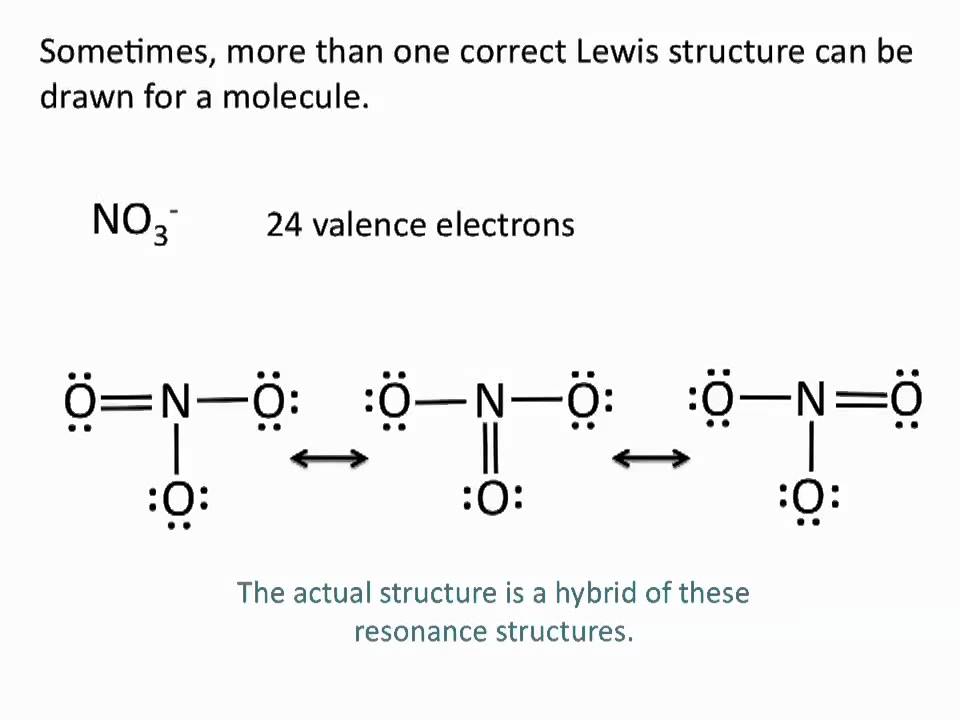
Each individual Lewis structure is called a contributing structure of. Resonance is a key component of valence bond theory and arises when no. Resonance structures happen when there are multiple correct Lewis structures for a molecule.
In one sentence it is the concept where electrons bonds are delocalized over three or more atoms which cannot be depicted with one simple Lewis structure. Its important to understand that the molecule is not interchanging between these resonance structures but rather that the structure of the molecule is a single hybrid of all the resonance structures. An interaction of an empty p-orbital and an adjacent electron pair.
So the fact that we can draw an extra resonance structure means that the anion has been stabilized. An interaction between the empty orbital and a π-bond. In resonance structures all of the atoms are located in exactly the same positions but the numbers andor locations of the electrons bonds or lone pairs may be different.
There are 4 types of resonance that youll have to know within the scope of your organic chemistry course. Resonance structures are significant because they provide a much more. 14 Resonance structures in Organic Chemistry Resonance stabilization effect also known as resonance effect as briefly mentioned in Section 13 is one of the fundamental concepts of Organic Chemistry and has broad applications.
Some molecules have two or more chemically equivalent Lewis electron structures called resonance structures. Organic compounds that contain double bonds in their structure are usually made of the overlap of p-orbitals on two. Resonance in chemistry is a tool used predominately in organic chemistry to represent certain types of molecular structures.
Basically like a fork in the road there is a choice to me made when drawing the molecules. Is defined as difference between actual bond energy and energy of most stable resonating structures. When more than one valid Lewis structure can be drawn for a given arrangement of atoms in a covalent compound they are referred to as resonance structures.
Resonance is a method of describing the delocalized electrons in some molecules where the bonding cannot be explicitly expressed by a single Lewis structure. It has particular value for describing delocalized electrons within certain molecules or polyatomic ions where the bonding cannot be expressed by one single Lewis. That generally results in a structure analogous to a simple π-bond.
Resonance averages the bond characteristics of a molecule as a whole. In chemistry resonance also called mesomerism is a way of describing bonding in certain molecules or ions by the combination of several contributing structures into a resonance hybrid in valence bond theory. What are Resonance Structures When switching from general to organic chemistry showing molecules as structures rather than simple formulas become one of the first things and priorities you need to learn.
The discussion of resonance effect heavily relies on the understanding of resonance structures. It is a concept that is very often taught badly and misinterpreted by students. Resonance stabilizes the molecule because energy of the resonance hybrid is less than the energy of any canonical forms.
However it is important to note that each of these structures cannot actually be observed in nature. Note that resonance structures are connected with a double headed resonance arrow and that the structures are surrounded by brackets. Resonance hybrid is a compound molecule ion or radical exhibiting resonance and having a structure represented in the written form as the average of two or more structural formulas separated each from the next by a double-headed arrow.
Lewis structures are essential for this as they show all the bonds and electrons in the molecule. Resonance is a mental exercise and method within the Valence Bond Theory of bonding that describes the delocalization of electrons within molecules. Each contributing resonance structure can be visualized by drawing a Lewis structure.
Resonance is one of those issues that you will have to deal with for both semester I II of organic chemistry. The combination of possible resonance structures is defined as a resonance hybrid which represents the overall delocalization of electrons within the molecule. Chemists prefer to use the structure of the localized electron to approximate the actual structure that contains delocalized electrons.
The resonance effect is a chemical phenomenon observed in compounds characteristic of double bonds of organic compounds.

Resonance Structure Easy Science Structure Definition Science Chemistry Easy Science
Drawing Lewis Structures Resonance Structures Chemistry Tutorial Youtube Chemistry Science Education Organic Chemistry

Octet Rule For Resonance Structures Octet Rule Organic Chemistry Chemistry Lessons
Comments
Post a Comment